Monday, July 16, 2012

The 10,000 Hour Rule

I loved watching Serena Williams and Roger Federer win Wimbledon again earlier this month.  Both are over 30 - imagine that!  But they are also expert, world class, phenoms, whatever you want to call it.  Writer Malcolm Gladwell (The Tipping Point) uses his educated and well-researched logic and makes an argument for what he calls the 10,000 Hour Rule in his book Outliers.  Gladwell argues that you need 10,000 hours of practice to be a phenom. 


I love his book Outliers:  The Story of Success and it's full of cool observations that no one else has thought of but are well researched and actually make sense. So what is an outlier?

According to Gladwell, an "Outlier" is a scientific term to describe things or phenomena that lie outside normal experience. In the summer, in Paris, we expect most days to be somewhere between warm and very hot. But imagine if you had a day in the middle of August where the temperature fell below freezing. That day would be outlier. And while we have a very good understanding of why summer days in Paris are warm or hot, we know a good deal less about why a summer day in Paris might be freezing cold. In this book he's interested in people who are outliers—in men and women who, for one reason or another, are so accomplished and so extraordinary and so outside of ordinary experience that they are as puzzling to the rest of us as a cold day in August.


We won't talk about many of the other chapters (they are all good), but this one has great meaning for sports and also for great riders.

Wonder how many hours young Reed Kessler has under belt.  She turns 18 this month but she has been riding forever.

(horsesinthesouth.com photo)

Here she is during her pony days.......

(usef photo)

Think about some of the others:  McLain Ward, Margie Engel, Beezie Patton, Karen O'Connor, Buck Davidson; all have been riding forever.

Gladwell argues that it takes about 10 years to get in 10,000 hours.  He uses examples of chess players, classical musicians (who learn their craft starting at an early age) and also the Beatles.  He claims that the Beatles were so good because they were able to hone their craft day after day, for months on end, 8 hours a day in Hamburg before they were famous.  This helped make them great.


I do agree that you can't be great or even pretty good in this day an age without a lot of practice. Riding is certainly like that. Those who want immediate gratification in this sport will be humbled over and over again.
Please take a look at this really interesting book if you have not seen it! 


Blowing Rock and the Blowing Rock Charity Horse Show


It's that special time of the year again, The Blowing Rock Horse Show starts next week in beautiful Blowing Rock, NC. The horse show is in its 89th straight year making it the longest continually running annual horse show in the eastern US. 

According to “A Village Tapestry: The History of Blowing Rock,” by Barry M. Buxton, “The peak of the summer season was the Horse Show with its parties and pageantry. The Blowing Rock Charity Horse Show, which began in 1923, attracted equestrians from throughout the Southeast. Lloyd Tate, the Horse Show's founder and director for many years, held the first show on Green Hill. In those early days the Horse Show was largely a social event with area riders." According to Buxton, the Blowing Rock Charity Horse Show was moved to Mayview Manor property in 1928, and its current location, complete with stables, riding areas and grandstand, sits on the site of the old Mayview Manor Golf Course.

Mr. Tate passed away this past year and that is him I believe in the red shirt on the horse show poster.


If you don't know where it is, it's in the mountains of N.C., just off the Blue Ridge Parkway.  Charlotte is probably under 2 hours away, Winston-Salem is about an hour and a half.  Blowing Rock is one of the prettiest places I know.  It is home for many wealthy Floridians who spend their summers in the lovely climate.  It is a small place, quaint, charming, cozy.  Some people might find it rustic, but therein lies its charm.


The downtown area is small but filled with cute shops and restaurants.  If you want to stay there, book early, especially in summer.

The horse show is just a few miles from town and the facilities are old, down in the bottom of a hill, so when it rains (and it always does) it becomes a mud pit.  It attracts a very competitive group of riders.  People come from all over for the two-week hunter-jumper events.


The views around Blowing Rock are spectacular.

There are some fun places to stay, this is Chetola, a resort that is located on a small lake just when you arrive.  I stayed there as a young girl, in one of the houses, before it was turned into condos and a conference center. 

 Moses Cone Park is close-by.  See my post in October 2011 about it.


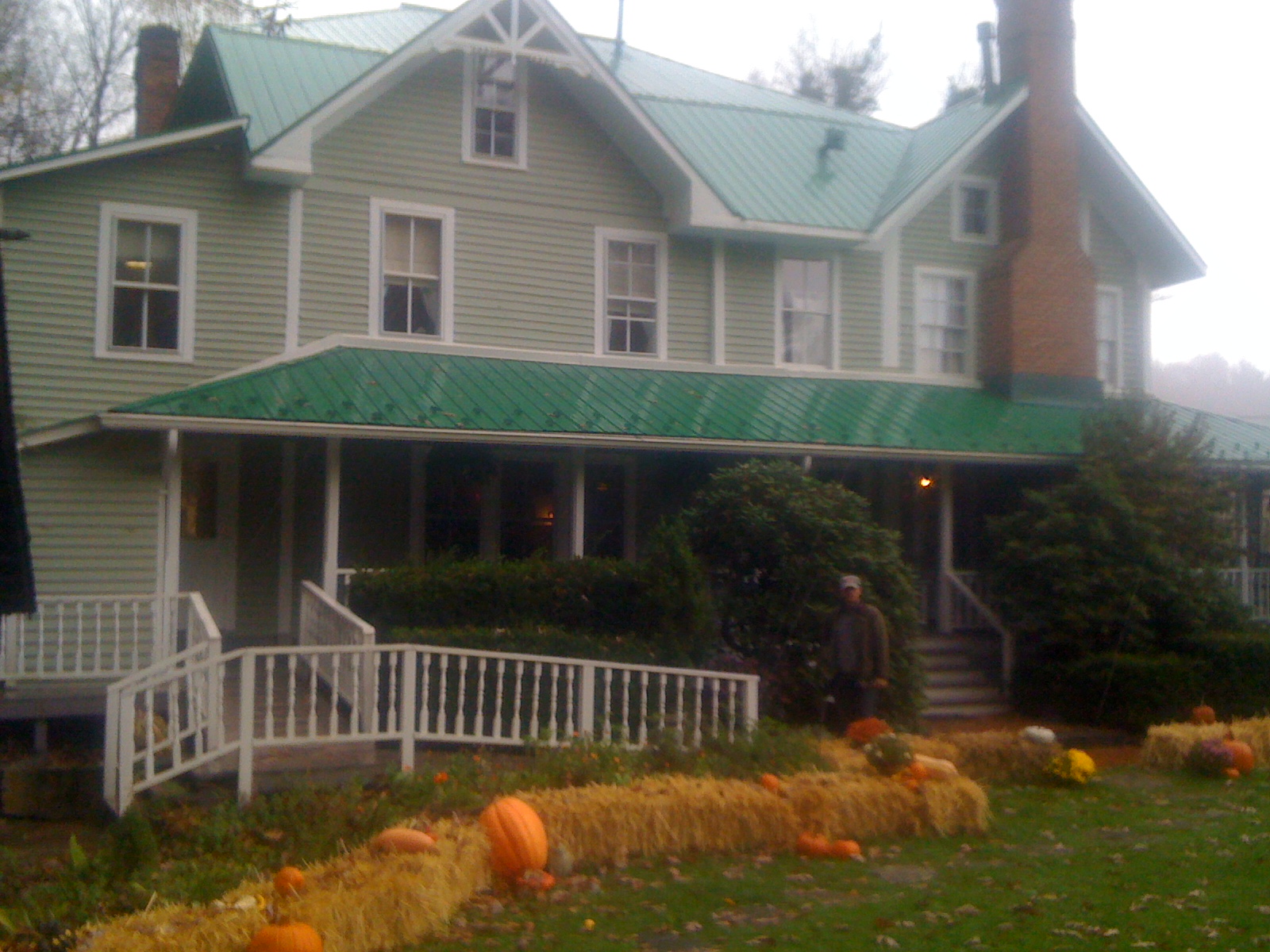
We stayed last fall at the Mast Farm Inn which is not in Blowing Rock proper but close-by.  Charming place.


<div style='text-align:center;font-size:11px;font-family:arial;font-weight:normal;margin:10px;padding:0;line-height:normal'><a href='http://www.dwellable.com/a/3654/North-Carolina/Blue-Ridge-Mountains/Blowing-Rock/Vacation-Rentals' style='border:none'><img src='http://www.dwellable.com/dwellback/3654.jpg' style='width:102px;height:20px;border:none;margin:0;padding:0'><br>Blowing Rock on Dwellable</a></div>

Thursday, July 12, 2012

Lost in Translation

About 10 years ago I wrote several articles for the Washington International Horse Show's program book.  WIHS as it is called, is one of the "indoor" shows - you have to qualify for it - only the best of the best get to ride there.  It's a fun show since it is literally in downtown DC, not far from the White House.  The horses have to spend the night downtown on the streets of DC. It is a really unique experience.

Some of the articles were intended for readers who may not ride or go to horse shows as WIHS brings in a large non-riding population to spectate. 

One of the articles was called "A Language All It's Own" and I kinda reworked what I wrote then for the blog today.  Some of the words we use in the "horse world" are well, lost in translation.  You'll see what I mean.

(SpruceMeadows.com photo of an "Oxer")


"Oxer" puzzled my mother.  She thought it might be associated with the shirts my father wears to the office, the ones from Brooks Brothers.  The few times a year she makes the trek to a show, she shrugs her shoulders when the trainers and riders start talking in a language that sounds like Swahili.  

The horse world is a subculture.  Nowhere is this more apparent than in the nomenclature familiar only to those who participate in the sport.  The ability to understand and master a vocabulary that's not even found on the Internet is a feat you must master, even at an early age.  A horse crazy 10-year old will likely know what a "roll top" or "oxer" is before she masters past participles.

(JumpsUsa.com - Roll top)

"Roll tops" and "oxers" are jumps used in hunter and jumper courses.  An oxer is a wide jump made with two pairs of standards and poles.  They are wider than "verticals" and I think harder to find the correct distance to.

Roll tops are often green, two to three feet high, and are usually found in a hunter course.  The front part of the roll top curves in a semi-circle, meeting the back at a 90-degree angle.  See the photos above. 


(Horse Country Chic Photo)

A "scrim sheet" can be found on show horses waiting outside a ring on a somewhat warm day.  Typically the sheet is in "farm colors" with a monogram, farm name, last name or even better - a prize from a well-known horse show (showing that you were champion or year end winner, etc).  The "scrim" can keep flies off the horse, keeps the horse's coat from getting bleached, or can help "cool" the horse.  The one above is probably nylon and shows the logo from a farm, the owner of this horse.  


 (Deversaddlery.uk.com photo)

A "martingale" is not related in any way to a nightingale.  Instead, it's a leather contraption, buckled around the horse's neck just in front of the withers, with a separate piece running from the girth to the bridle's noseband.  The one above is a called a "standing martingale" and there are other kinds like a "running martingale" (which is only used on jumpers, not allowed in the hunters).  It keeps the horse's head from getting too high (which is not the look you want in a hunter).  Always made of leather.  Not sure where the name came from. 

 (Britainequestrian.com photo)

Have you heard of a "breastplate?" And no, we are not going into porn.  A breastplate is typically leather like in the photo above.  It goes around the horse's neck much like the martingale.  A smaller strap attaches to the front of the saddle on each side of the neck (you can't see that in this photo) and the center piece attaches to the horse's girth between the legs.  This keeps the saddle from sliding too far back on the horse's back.  You often see these used in fox hunting where the horses are doing a lot of running and also in steeplechase races.  

Here are few more words that have been lost in translation:

A kimberwicke?

It's a bit.  Not sure where the name came from. Sounds British.  Does anyone know?  This is a certain type of bit, that is a curb chain and the copper piece in the middle is like a roller ball.  Can you now name each part without a cheat sheet?  Test is tomorrow.

(Bluegrasshorsesupply.com)

Hackamore?  This is a bridle without a bit.  You can't show in the hunters in one of these - against the rules.  Again, not sure how the name came into being.  Anyone know?


Liverpool?

It's a jump - the blue part that holds water.  Only jumpers have to navigate these.  You horse can't be afraid of water to jump these.  Sometimes you jump only the water, no poles. Wonder if these came about before of after the Beatles?

 (Sebastionproducts.com photo)

Have you added a few new words to your vocabulary?  I hope so.  Maybe next time you are around a "horse person" you might explain how sometimes things get lost in translation. 

Wednesday, July 11, 2012

Robert E. Lee's Traveller


Robert E. Lee's Traveller was one of the most famous horses of the Civil War era.  He was born in 1857 in West Virginia and died in Lexington, VA in 1871.  He was not a big horse by today's standards, 16 hands, and was gray in color with black mane and tail. 


Traveller's orginal name was Jeff Davis.  He was an American Saddlebred and he was purchased in 1861 by Capt. Joseph M. Broun for $175 (about $4000 today).  Broun renamed him Greenbriar  General Lee took a liking to the horse and called him his "colt" and predicted to Broun that he would use him before the war ended.  When Lee was transferred to South Carolina in 1862, Broun sold him the horse for $200 and Lee renamed him Traveller.  Lee always used the "LL" in the name after the British style. 

Lee and Traveller formed a bond during the war.  Traveller was not easily frightened.  But once he did get spooked - at the Second Battle of Bull Run.  Lee was at the front reconnoitering dismounted and holding Traveller by the bridle.  He became frightened and plunging, pulled Lee down on a stump breaking both his hands.  

When the war ended Traveller moved with Lee to Lexington, VA where Lee headed what is now Washington & Lee University. In 1870, at Lee's funeral procession, Traveller was led behind the caisson bearing Lee's casket, his saddle and bridle draped with black crepe.  Shortly thereafter, in 1871, Traveller stepped on a nail and developed tetanus.  Since there was no cure at that time, he was shot to relieve his suffering.  He is buried today at Lee Chapel on the W & L campus, just outside (Lee is buried inside).  I took the photo of his grave early this morning.  Many mornings you will find carrots there for him.


When Traveller died he was laid to rest behind the main buildings at W & L.  But somehow, his bones were unearthed and his bones were bleached for exhibition in Rochester, NY in 1875 and 1876.  In 1907, Richmond journalist Joseph Bryan paid to have the bones mounted and returned to W & L.  For a time they were displayed in the Brooks Museum on the campus but the skeletons were vandalized.  In 1929 the bones were moved to the basement of Lee Chapel where they stood for 30 years.  In 1971 Traveller's remains were buried in a wooden box encased in concrete at the Chapel where they are today.  

The stable where Traveller lived is still visible today and acts as the garage for the Presidents' House.  The stall itself is still there inside the building and the stable doors are kept open - this is where he lived his last days.  Legend has it that Traveller's spirit is still alive in the stable area.  The doors are kept open so that his spirit can wander freely.  The green doors on the building are referred to as "Traveller Green."


There was hay for him in his trough early this morning


Washington & Lee should be commended for taking such good care of Traveller after all these years.  Incidentally, the school has a Safe Rider Program.  Student are known to say "Call Traveller and you will get home safely."

Incidentally, there is an interesting book if you can find it called Traveller by Richard Adams (1988).  The book is fictional, first-person narrative.  Traveller tells his story to a cat in the stable.   Have not read it but have heard about it.  Interesting twist don't you think?

Tuesday, July 10, 2012

Great Gelato

I'm not a dessert eater, but I do like gelato in summer.  Ice cream is too heavy for me.  On a hot summer evening, Gelato makes a nice, light way to end a good meal.  Homemade gelato typically contains 4-8% butterfat, versus 14% for ice cream.  But gelato can have a lot more sugar. 


Gelato dates back to frozen desserts served in ancient Rome and Egypt made from snow and ice brought down from mountaintops and preserved below ground.


I buy this brand locally.


This is another one that often appears in the stores.


A recent Forbes Magazine story selected "the best gelato in America."  The author dished the well known Grom chain (locations in NYC, Malibu, Tokyo, Paris, and many in Italy) for an unlikely winner of this title - Morano Gelato in New Hanover, New Hampshire. The owner who spent time in Italy working under a master in Sicily, only makes two flavors each week. Funny thing happened, the near-by Ben & Jerry's went out of business (and this is a college town - home to Dartmouth).  Competition has a way of doing that.


I know one thing for sure, if we keep having these 100 degree days, I'll keep eating gelato.  Happy Tuesday!

The Olympics are Coming


Can you believe that in a few weeks we'll be streaming London!  I can't wait. Let's hope the rain stops in time and the place dries out. 

I am loving the Olympic Equestrian Poster by Krisen Campora:


You can purchase it here:

http://www.kristenacampora.bigcartel.com/product/london-2012-olympics-poster-equestrian


And if you are a big history buff and want to look back at earlier Olympics, the FEI (Federation Equestrian Internationale) has created a great site that chronicles the history.  It goes way back, has wonderful stats and photos.  Some real work went into this.  I am impressed.

http://history.fei.org

Sunday, July 8, 2012

Socialite Equestrians

Seems like there are a lot of rich and famous young equestrians these days - those who you might find on an Olympic caliber horse one day and at the Calvin Klein runway show the next.


Princess Grace's granddaughter, Charlotte Casiraghi, dons the cover of Town & Country this month.  She's also the face of Gucci, and with her looks and pedigree, well, she's perfect for the role. Got to admit that I don't like this cover photo.  Her hair should be neatly put up in her helmet with a hair net (this is the "George Morris" coming out in me for those who know the discipline that is inherent in riding horses competitively).


I can't speak for her riding skills, but she certainly looks the part. She's not a Reed Kessler, by any means, but her high profile name brings exposure to the equestrian world.

There are plenty of other young "high profile" names out there who also happen to love and ride horses competitively.

Jessica Springsteen, daughter of "The Boss."


Bill Gates' daughter, 15-year old Jessica.


Georgina Bloomberg, 29 year old daughter of Mayor Bloomberg.  Georgina likely would have tried out for the Olympic show jumping team this year but is recovering from an injury.  See some of my earlier posts about her and her charity, The Rider's Closet.

Zara Phillips is the daughter of Princess Anne and Captain Mark Phillips and is an accomplished Three Day Event rider, winning many of the world's most coveted titles in this event. See some of my earlier blog posts about her. 

Steve Jobs' daughter, Eve rides in the hunters and equitation in California.

And don't forget about the Onassis family. In addition to Jackie, Ari's daughter has always loved horses.  

Wikipedia Photo

Athina Onassis Roussel is an accomplished equestrian. She is the only surviving descendant of Ari Onassis, the Greek shipping magnate and the sole heir to his fortune.  She married Brazilian Olympic show jumper Alvaro de Miranda Neto in 2005 and she goes by the name Athina Onassis de Miranda.  She also switched her national affiliation from France to Greek, effective for all of her equestrian competitions.  She is based in Sao Paulo.

And Paige Johnson, daughter of billionaire founder of Black Entertainment Television, Robert Johnson, and Sheila Johnson.  She splits her time between family farms in Wellington and Middleburg.  Paige is a very good rider and started in the ponies and worked her way up to Grand Prix jumpers. Here she is pictured with her mother, Sheila. Their Salamander Farm in Middleburg is incredible.


Enjoy your Sunday. It is like a sauna outside. Was in the saddle this morning at 6:30 am!  Stay cool!

Related Posts Plugin for WordPress, Blogger...